
Sudoku Moriichi-go ichi-e (一期一会)
Quiet focus.
Zero clutter.
A calm home for every puzzle. Sudoku Mori is handcrafted in Swift and SwiftUI, and built to be picked up for a few quiet minutes at a time.
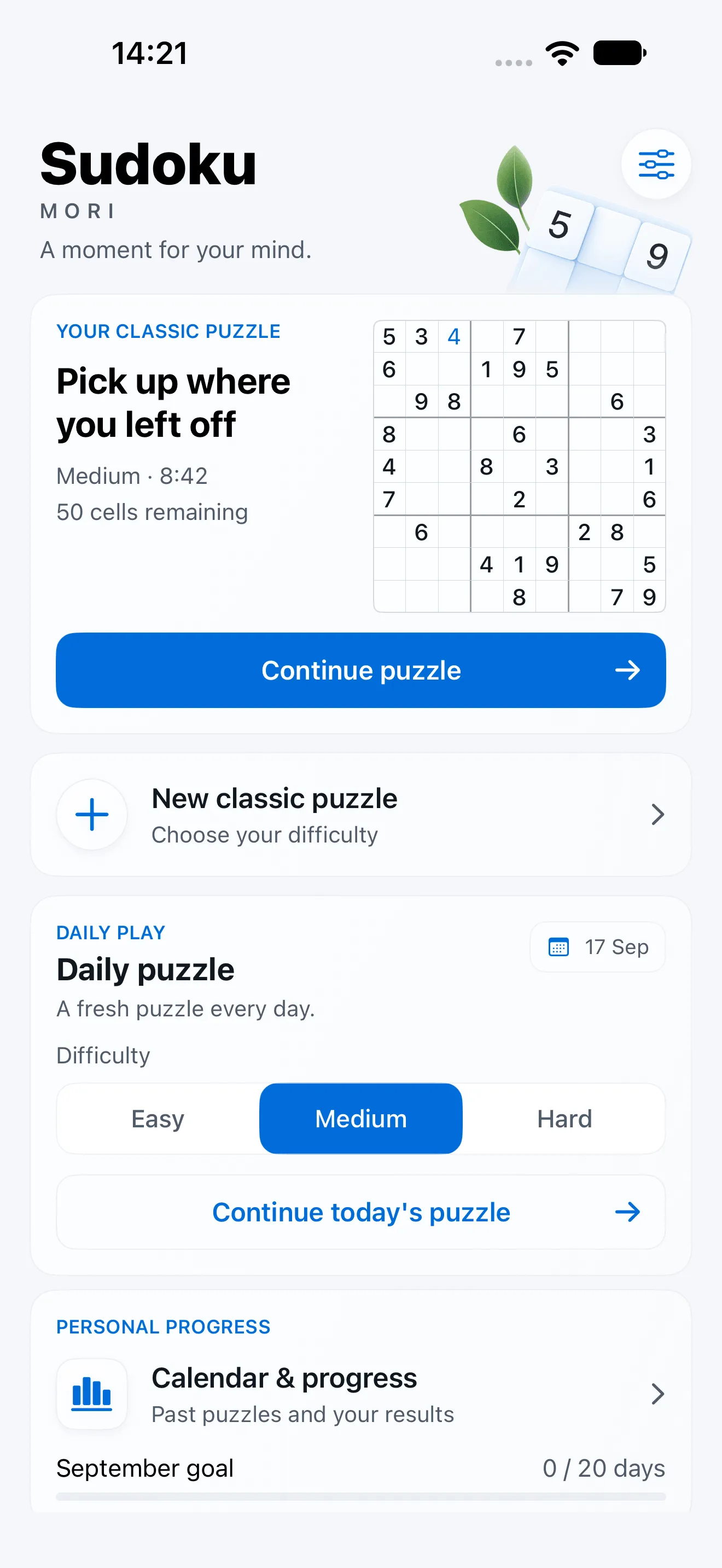
Light 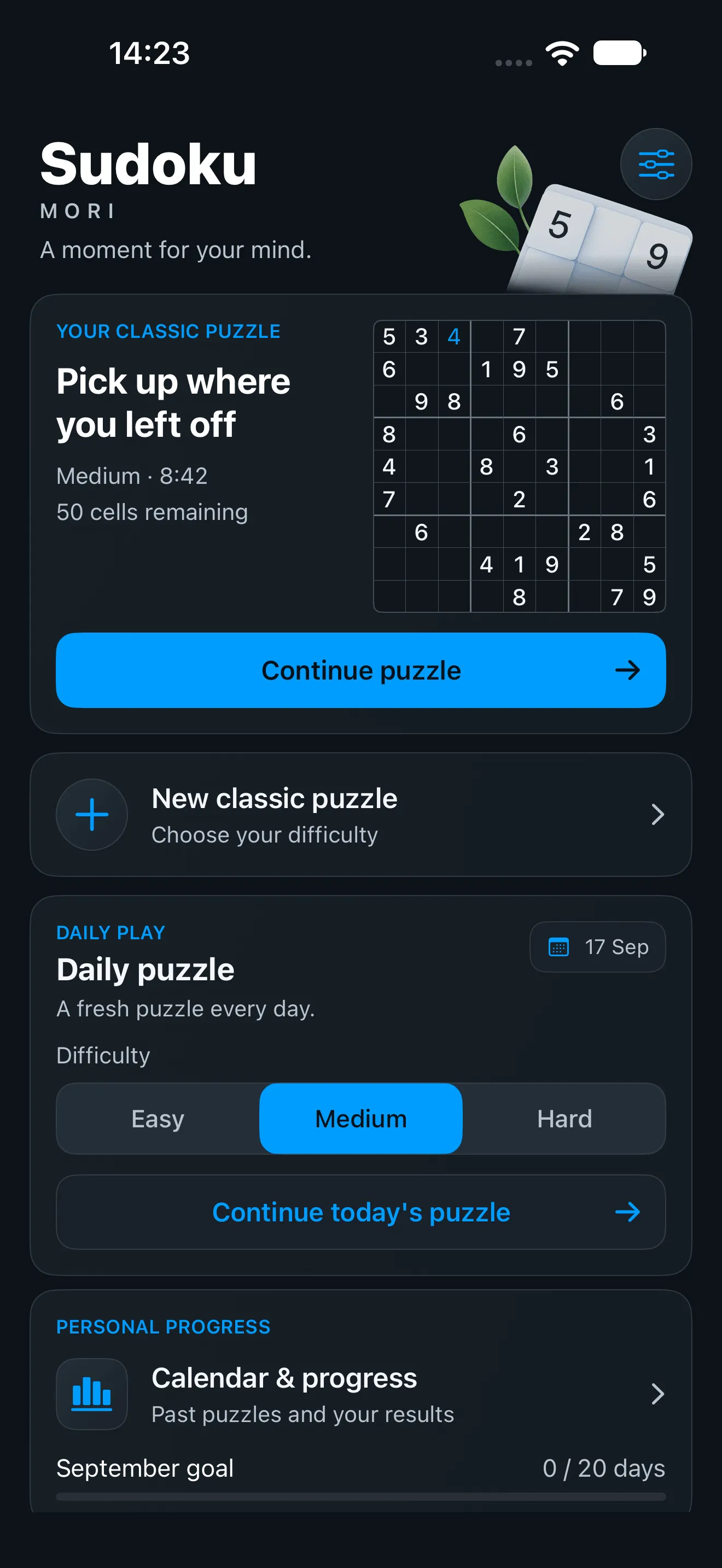
Dark
The board
Every number, one tap away.
A 9×9 grid that fills the width it is given, a keypad sized for a thumb, and a row of controls that never moves. Tap a number to place it, or hold it to keep it lit while you scan the grid.
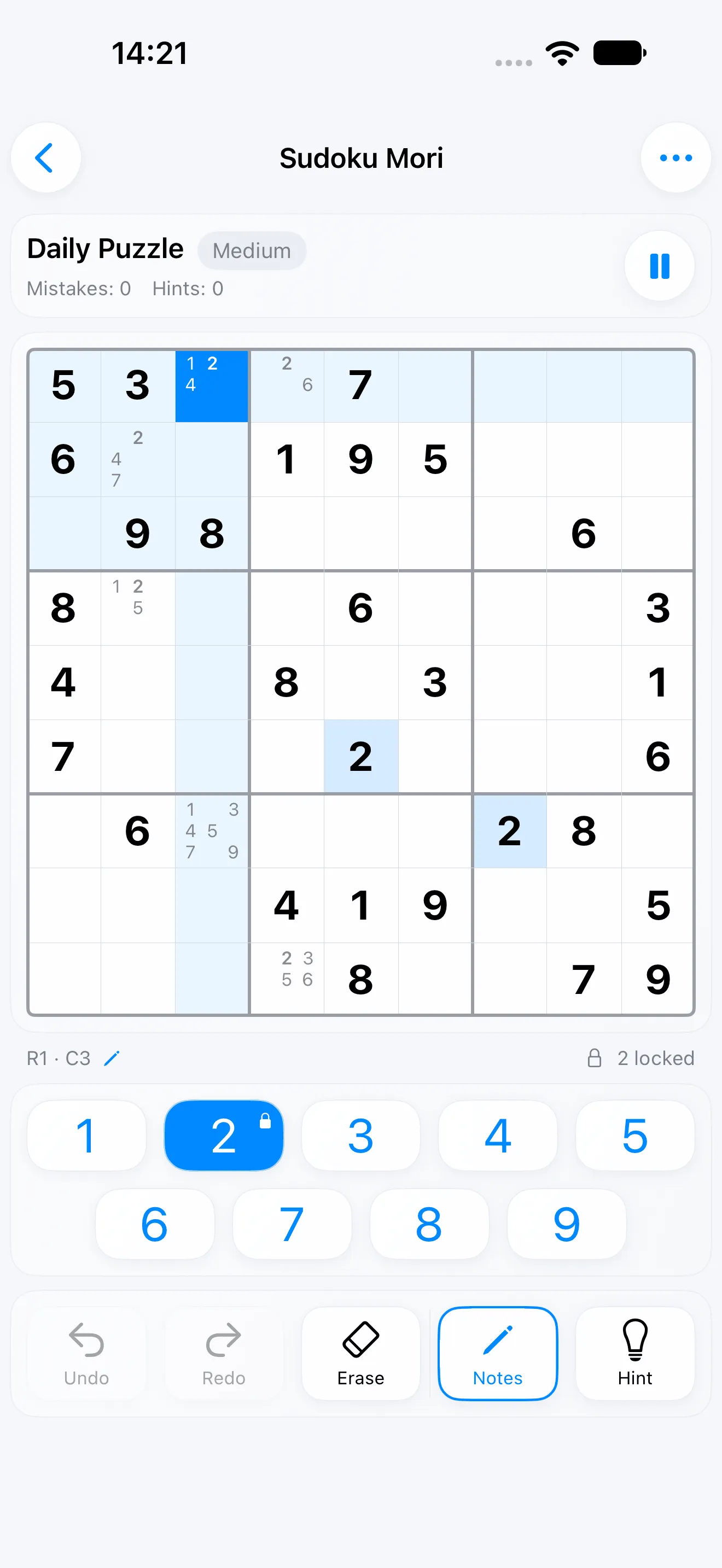
Light 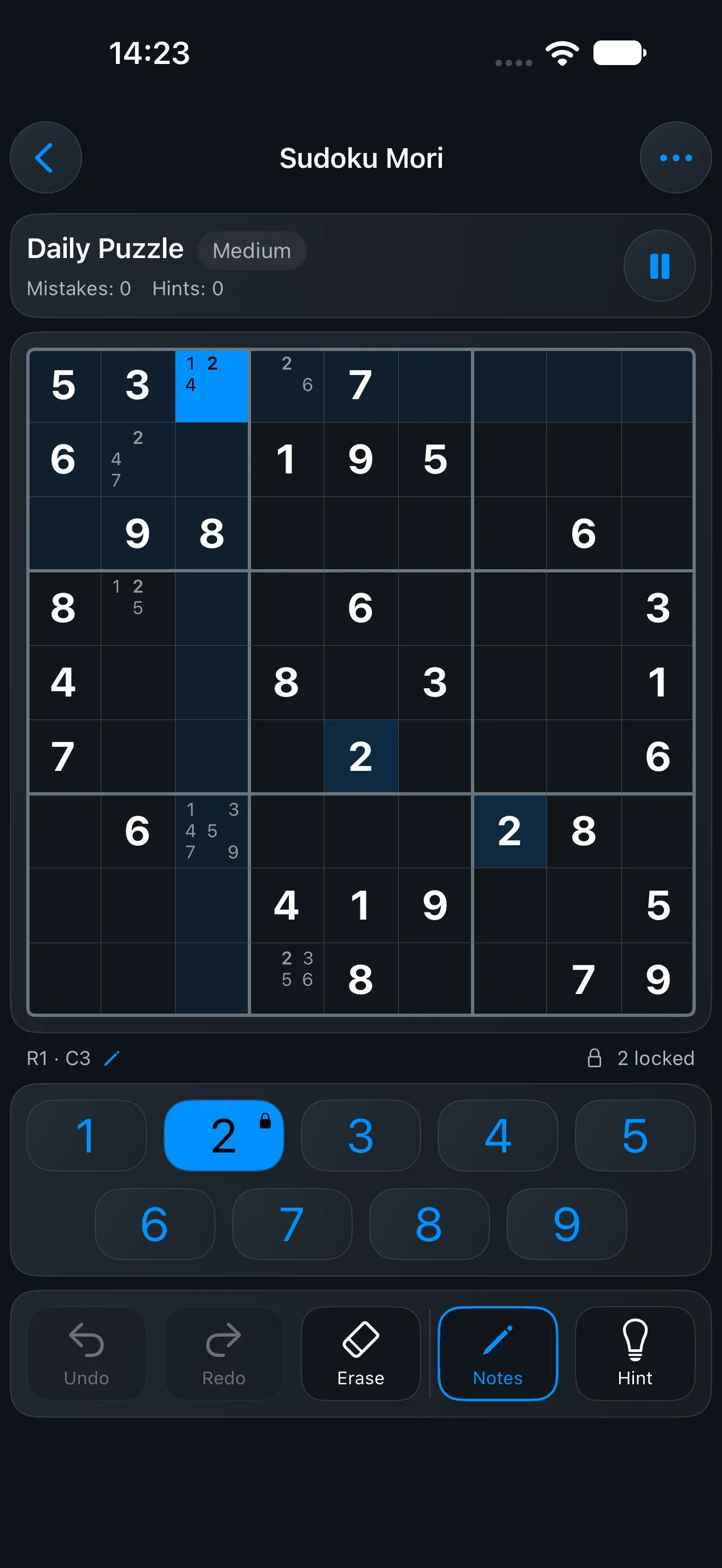
Dark
What is inside
Handcrafted in Swift and SwiftUI.
No cross-platform wrapper and no web view. Sudoku Mori is a native game, written for the two devices it runs on.
Nothing in the way
No advertising, no pop-ups and no countdown. Open the app and the puzzle is exactly where you left it.
One-handed controls
Undo, redo, erase, notes and a hint sit under the board, within reach, rather than inside a menu.
Notes that clear themselves
Pencil in candidates and the game takes them back out of the row, column and box as the grid fills in.
Hints that teach
A hint names the technique behind the next move, and the lessons walk through each technique step by step.
Progress without pressure
A daily puzzle, streaks, a monthly goal and a calendar of past results. Kept quietly, never pushed at you.
Private by design
No account to make and nothing to sign up for. Progress stays on your device, and in your own iCloud if you want it there.
Technique lessons
Every technique, explained.
Eight techniques, from a single candidate to X-Wing. Each one opens with a worked example and then three puzzles of its own, so a move can be learnt and used before the next one arrives. Lesson puzzles are kept apart from the daily ones, and any lesson can be revisited.
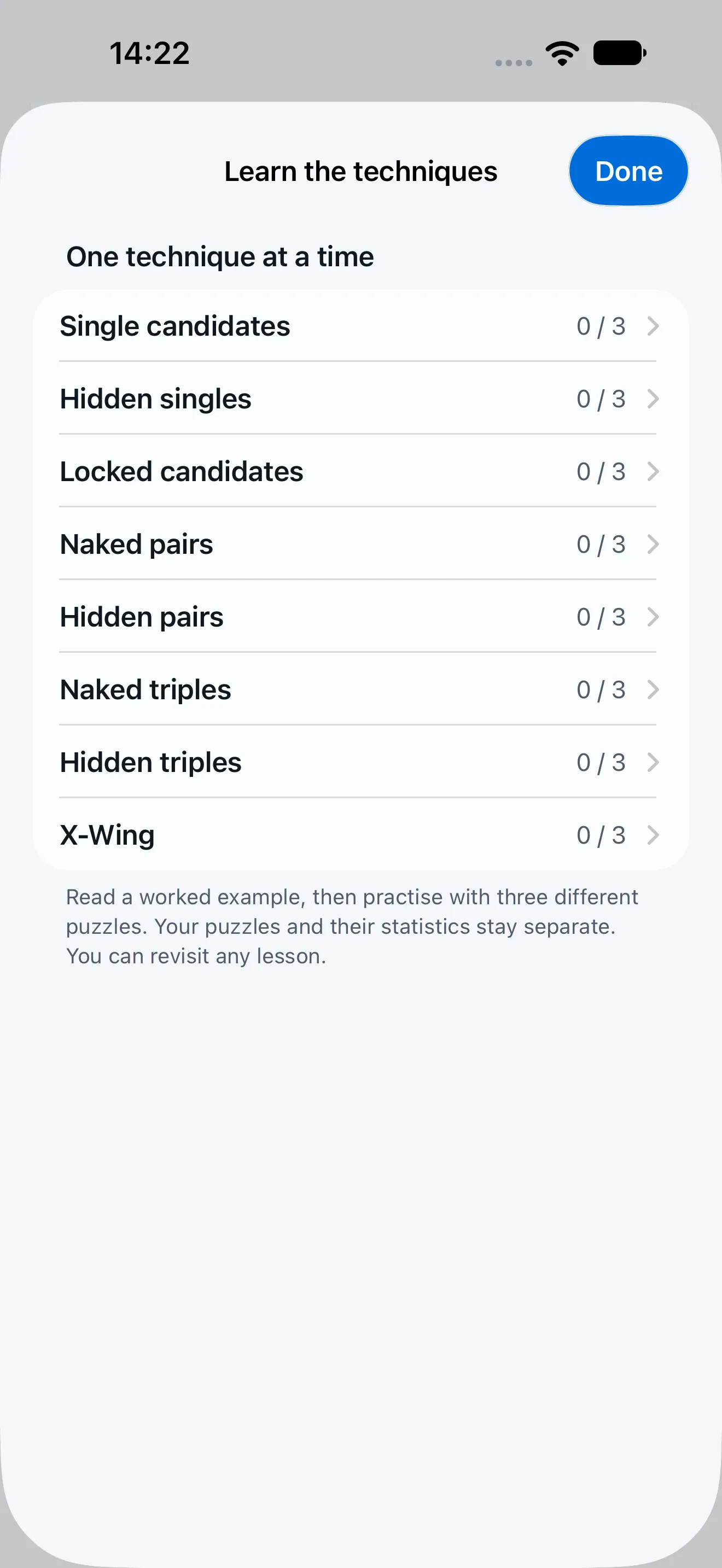
Light 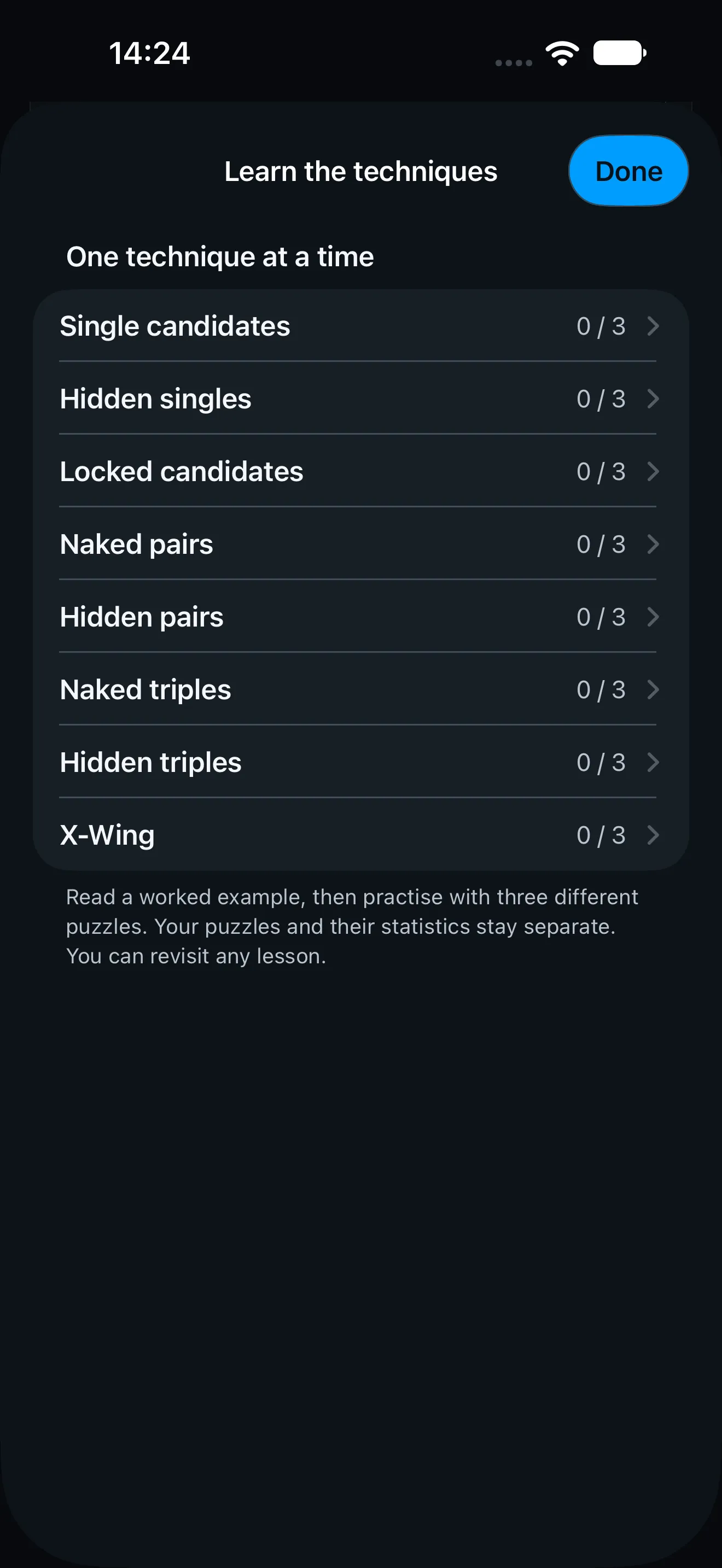
Dark
Puzzle solving should be a meditative daily ritual, not a flashing mobile casino.
The belief the whole game is designed around.
Two ways to play
Take your time, or take the test.
Relaxed mode lets you sit with a puzzle for as long as it takes, with unlimited mistakes and hints that explain the technique you are missing. Challenge mode allows three, and counts both them and your hints beside the clock.
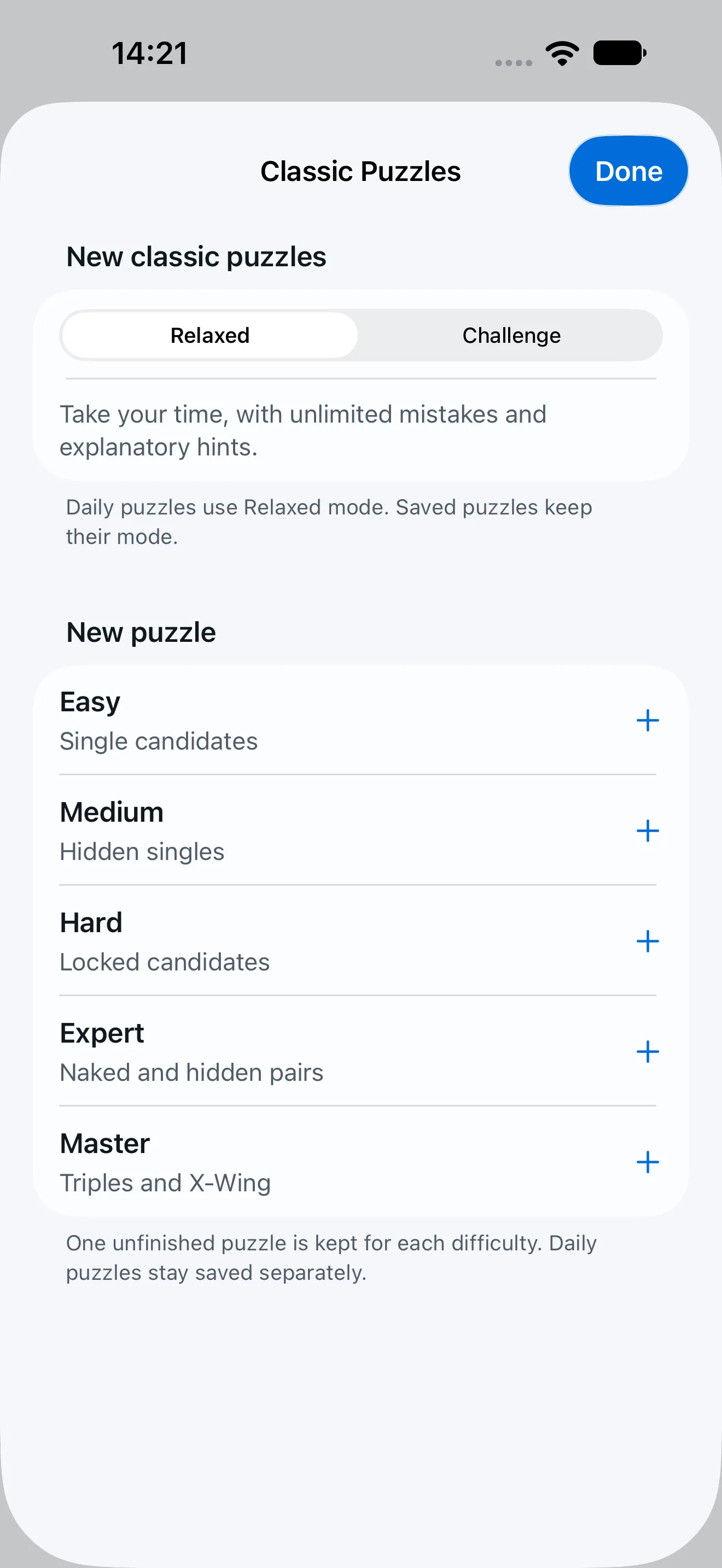
Relaxed 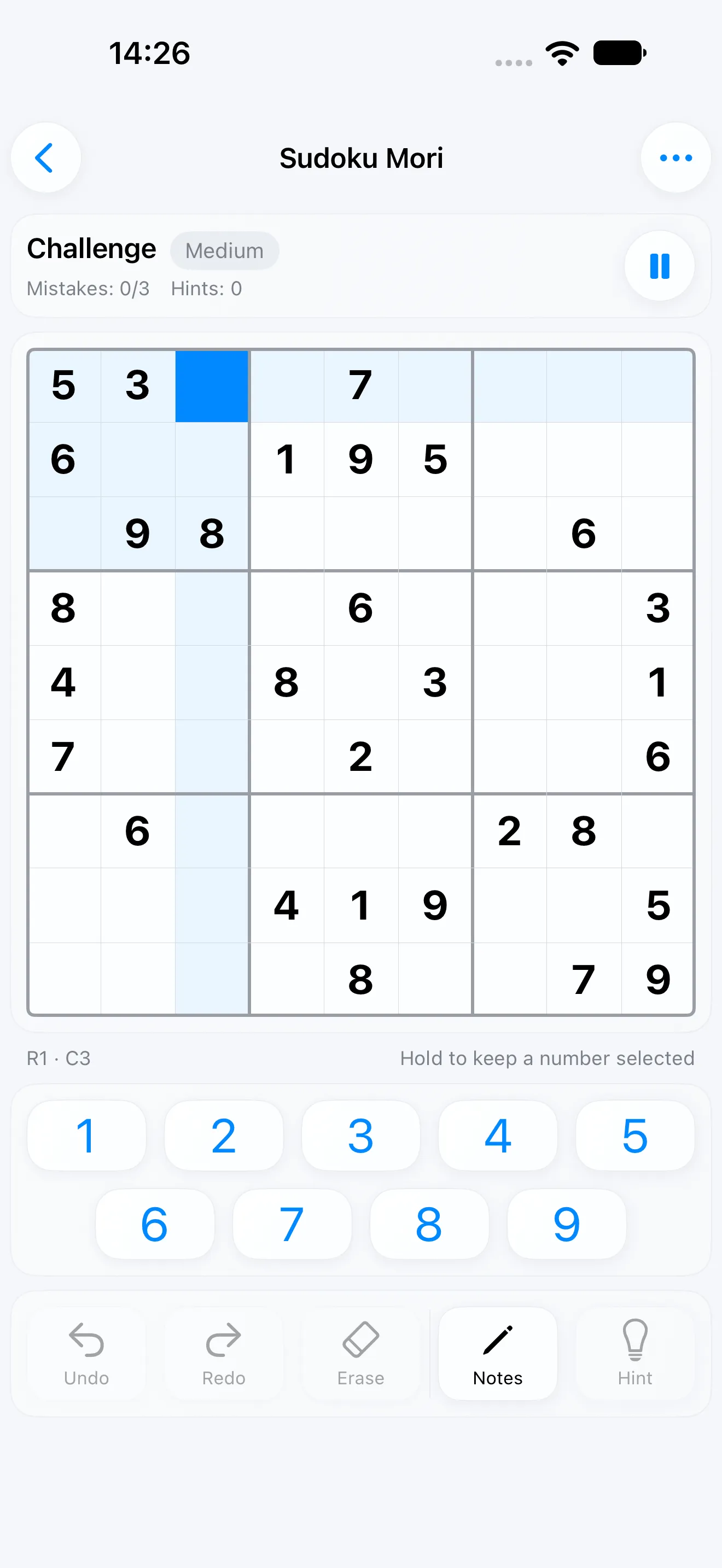
Challenge
The quiet parts
Nothing to interrupt you.
Finishing tells you what it took and nothing more. Progress is a calendar you can ignore: the dates you have solved, a monthly goal to aim at if you want one, and a streak you are free to break.
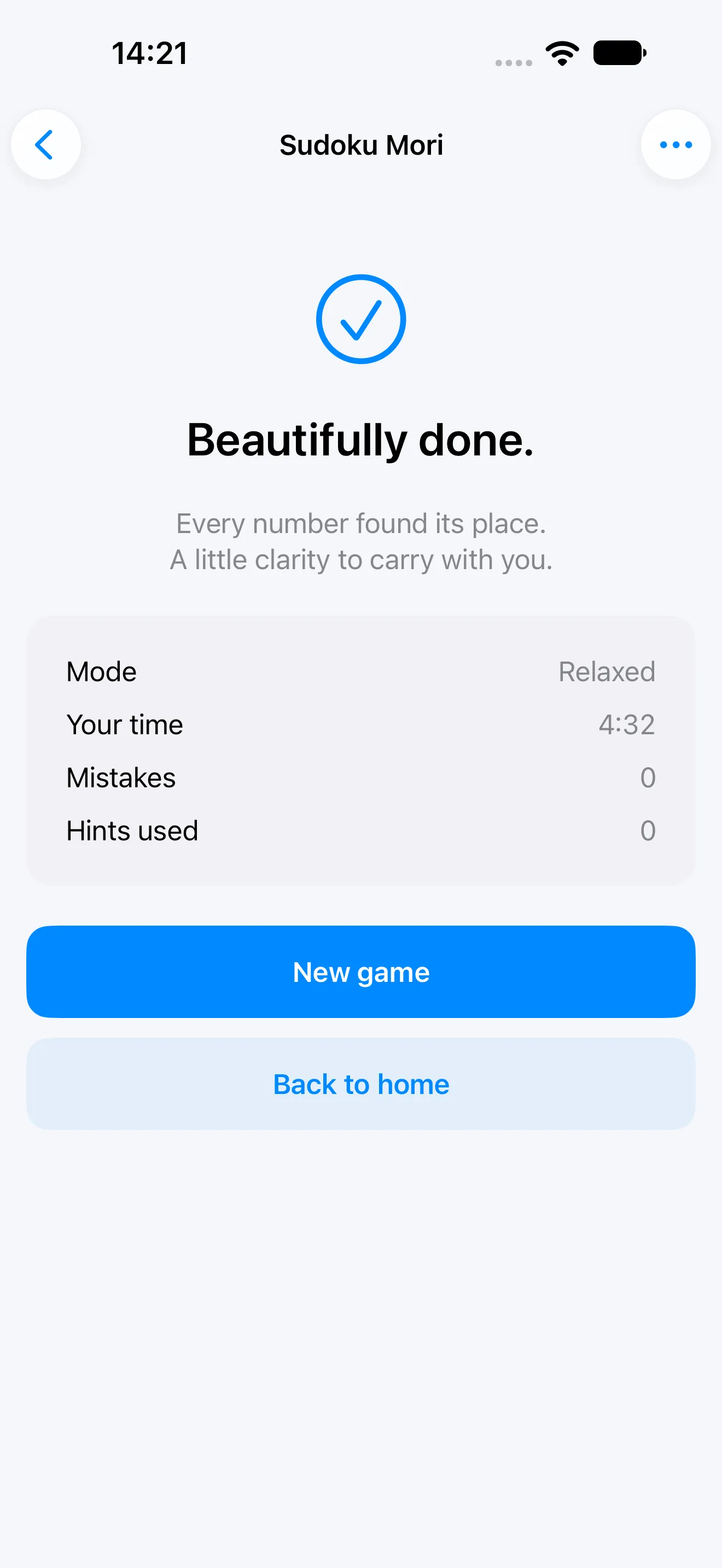
Complete 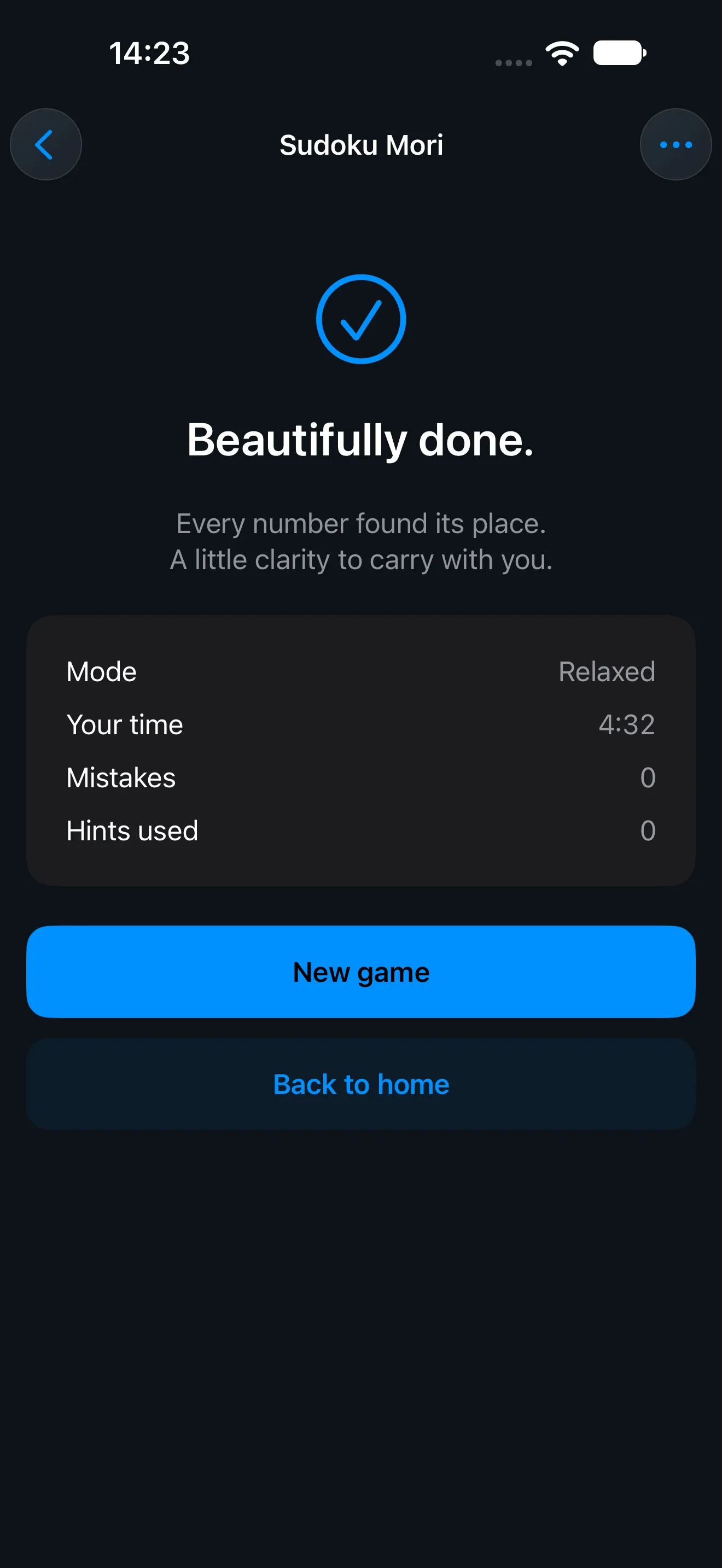
Complete · Dark 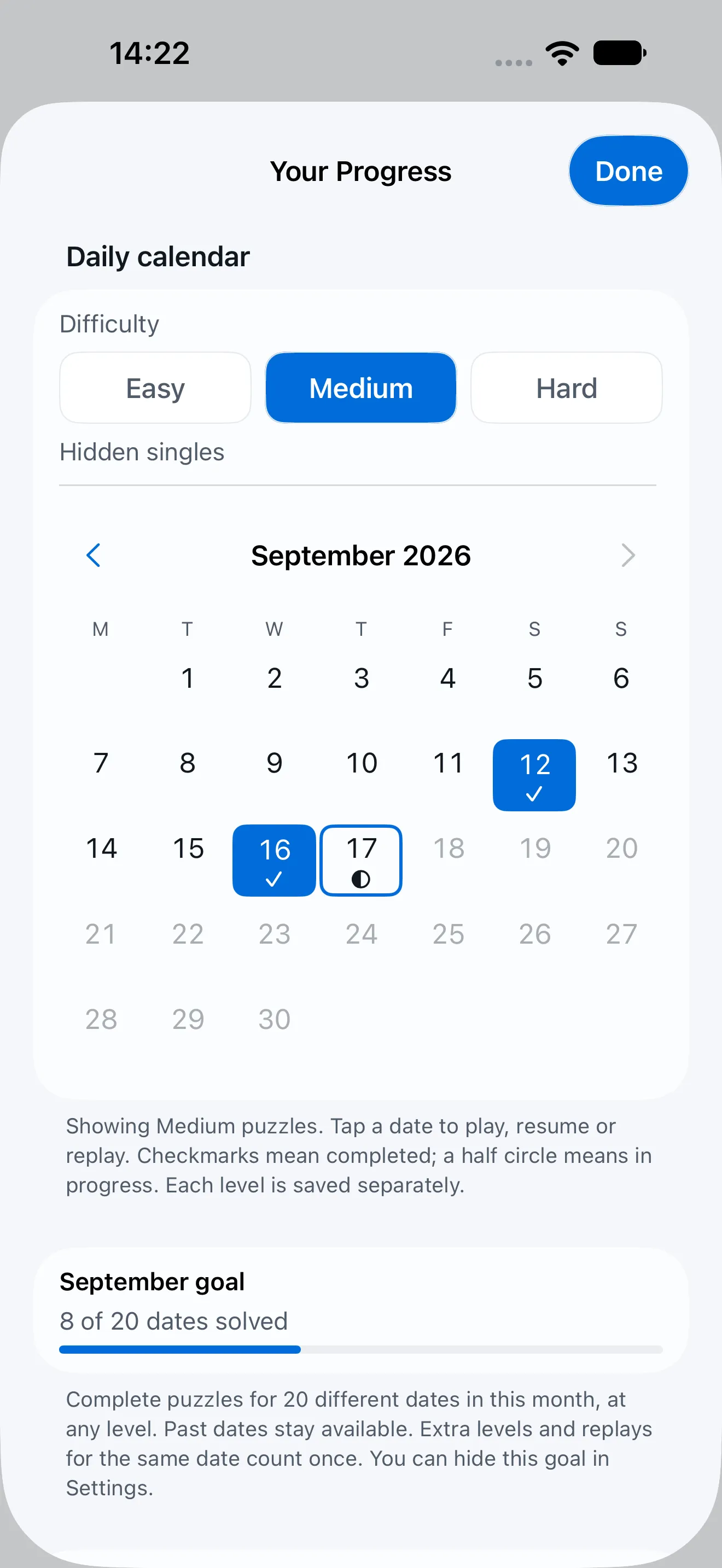
Progress 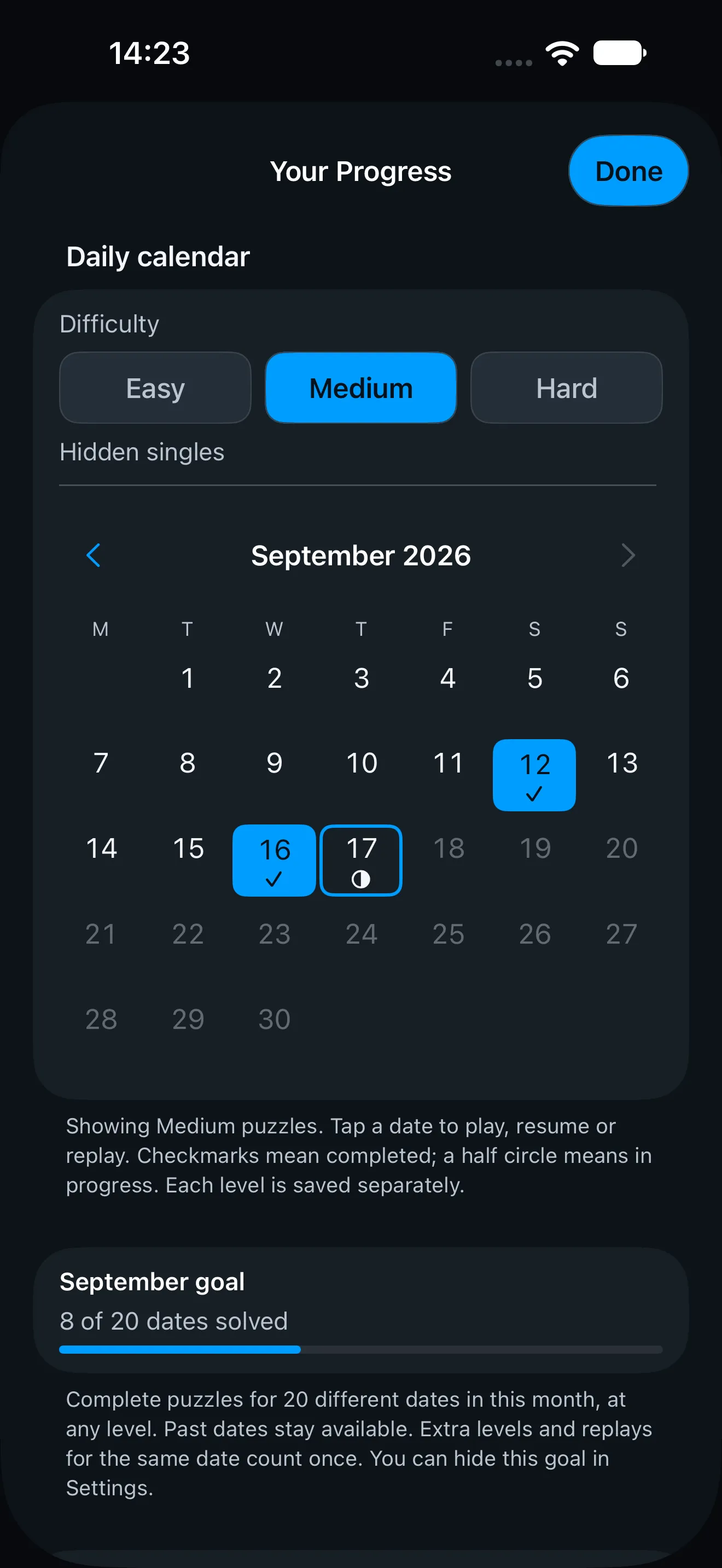
Progress · Dark
Elevated workspace
Built for the grand canvas of iPad.
A two-column layout that finally uses the whole screen: the board fills one side and the keypad, notes and hint controls take the other, so the grid is never sitting under your hand. Which side each one takes is yours to choose, and the layout mirrors to match.
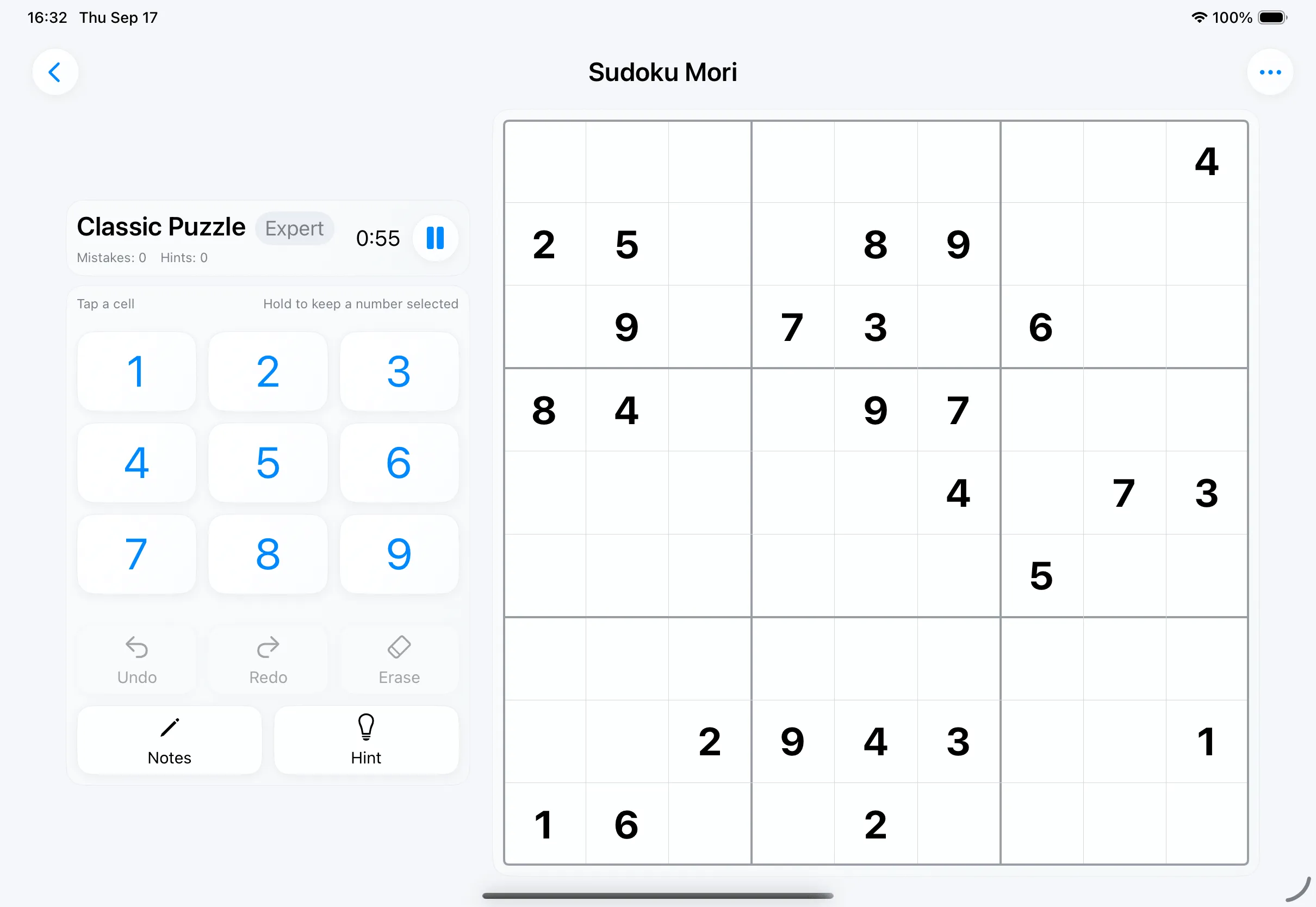
Left-handed · Light 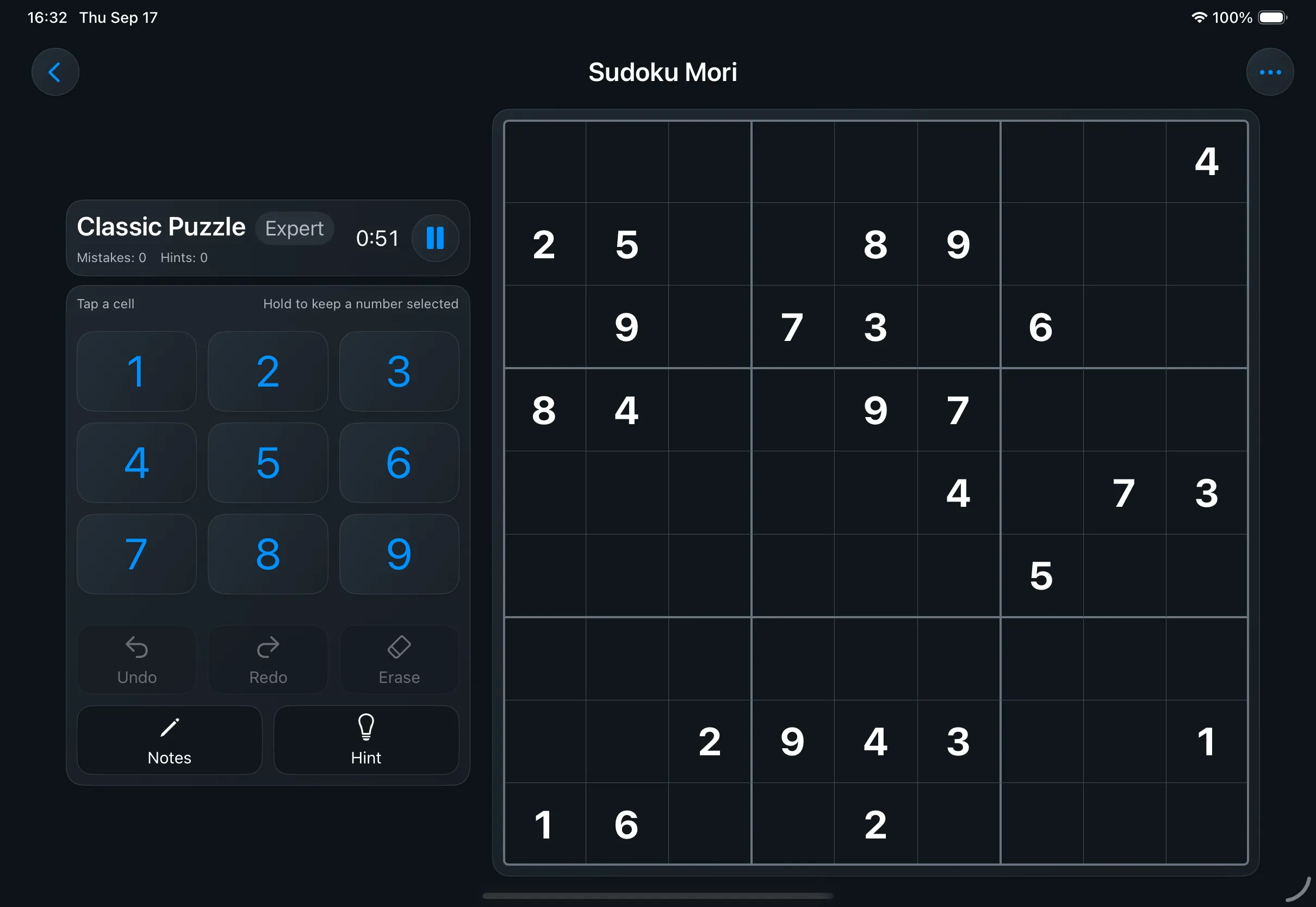
Left-handed · Dark 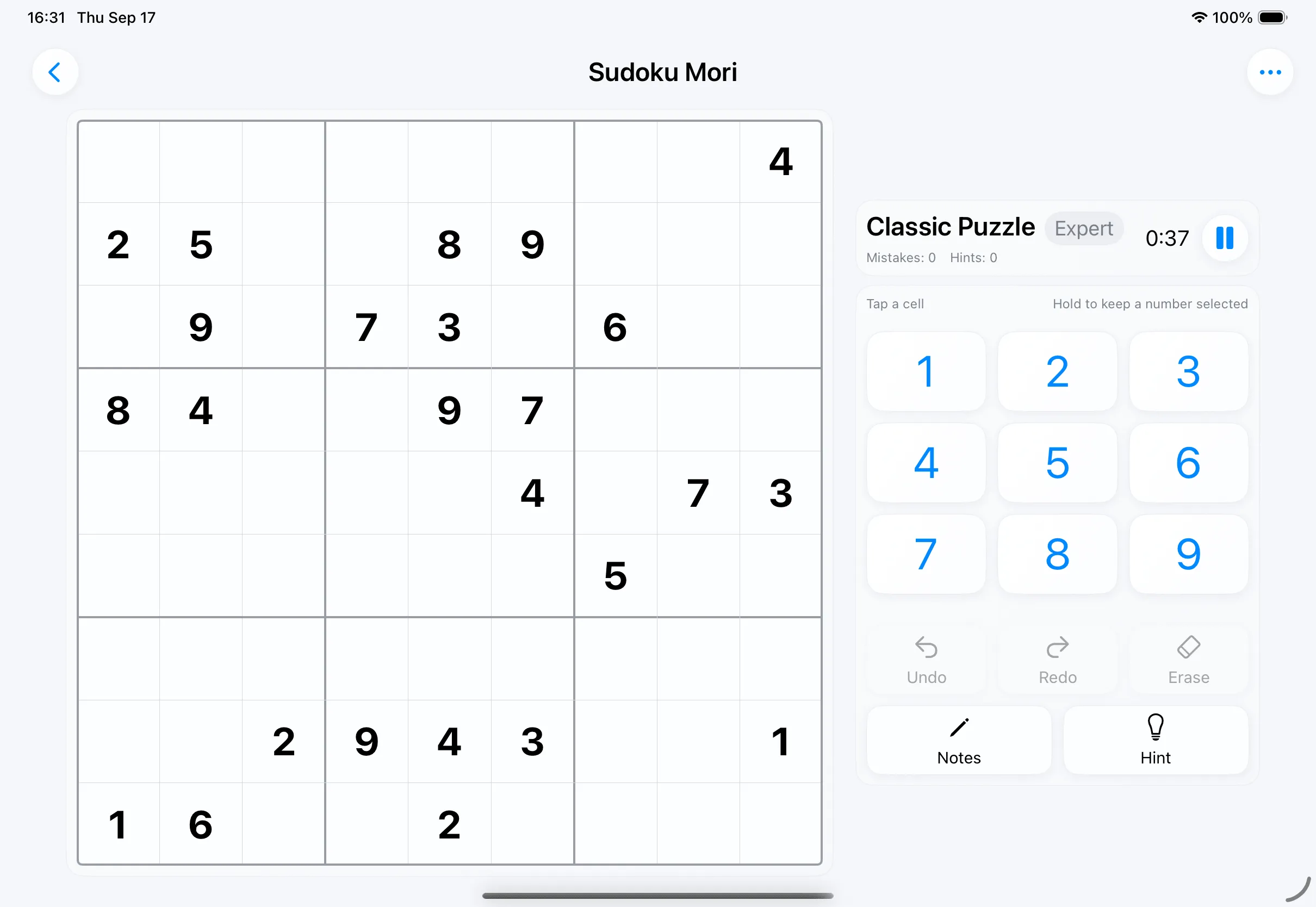
Right-handed · Light 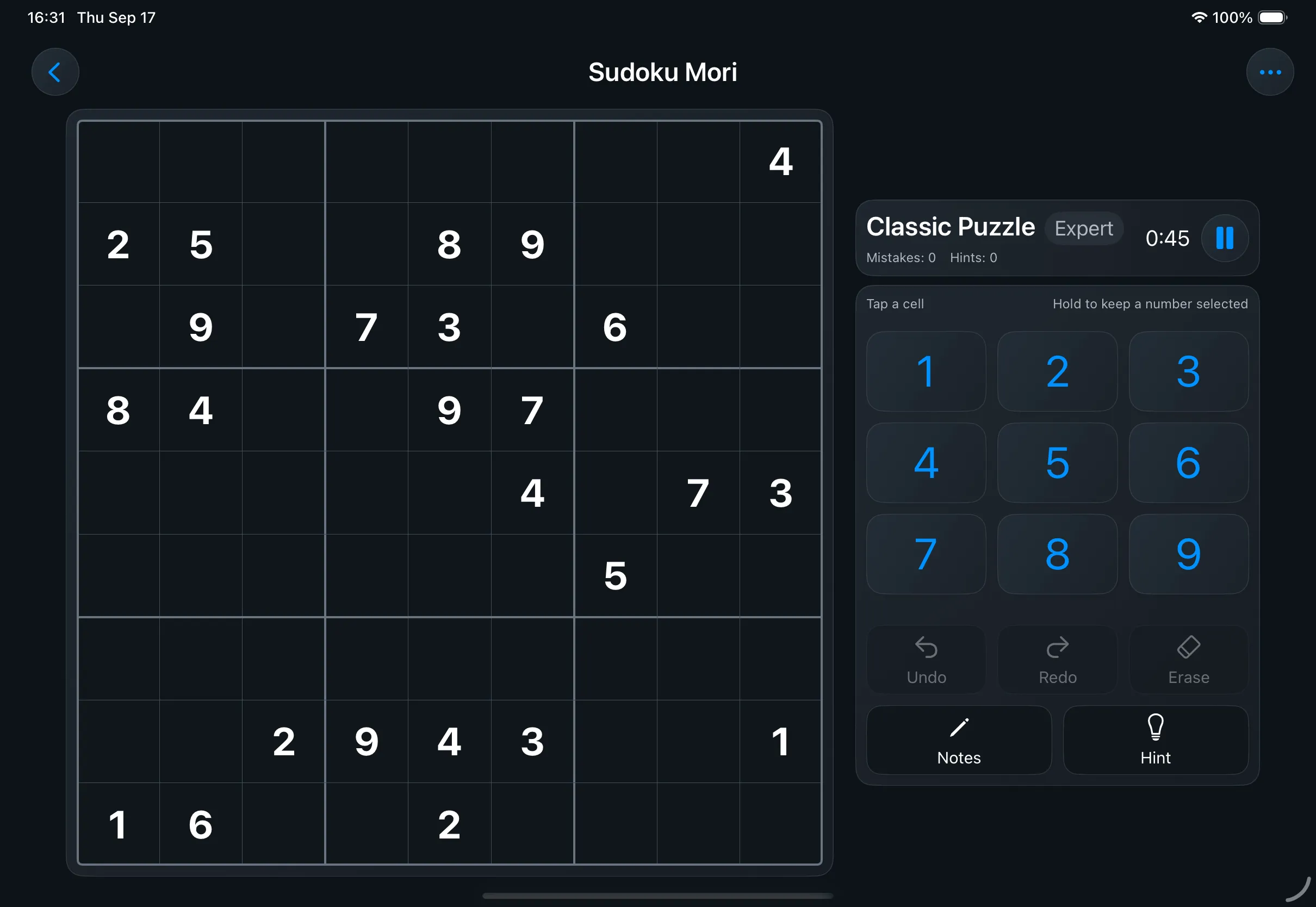
Right-handed · Dark
Our principles
Respect for your attention.
Zero distractions
Nothing blinks, moves or asks for attention while you are thinking.
Native, not wrapped
Swift and SwiftUI throughout, so it behaves like the rest of the system.
Yours to keep
It plays with no connection at all, on a train or on a plane.
Comfortable to read
Text follows your system size, contrast can be raised and haptics can be turned off.
Take a quiet moment today.
Sudoku Mori is in beta now, and on its way to the App Store for iPhone and iPad.